
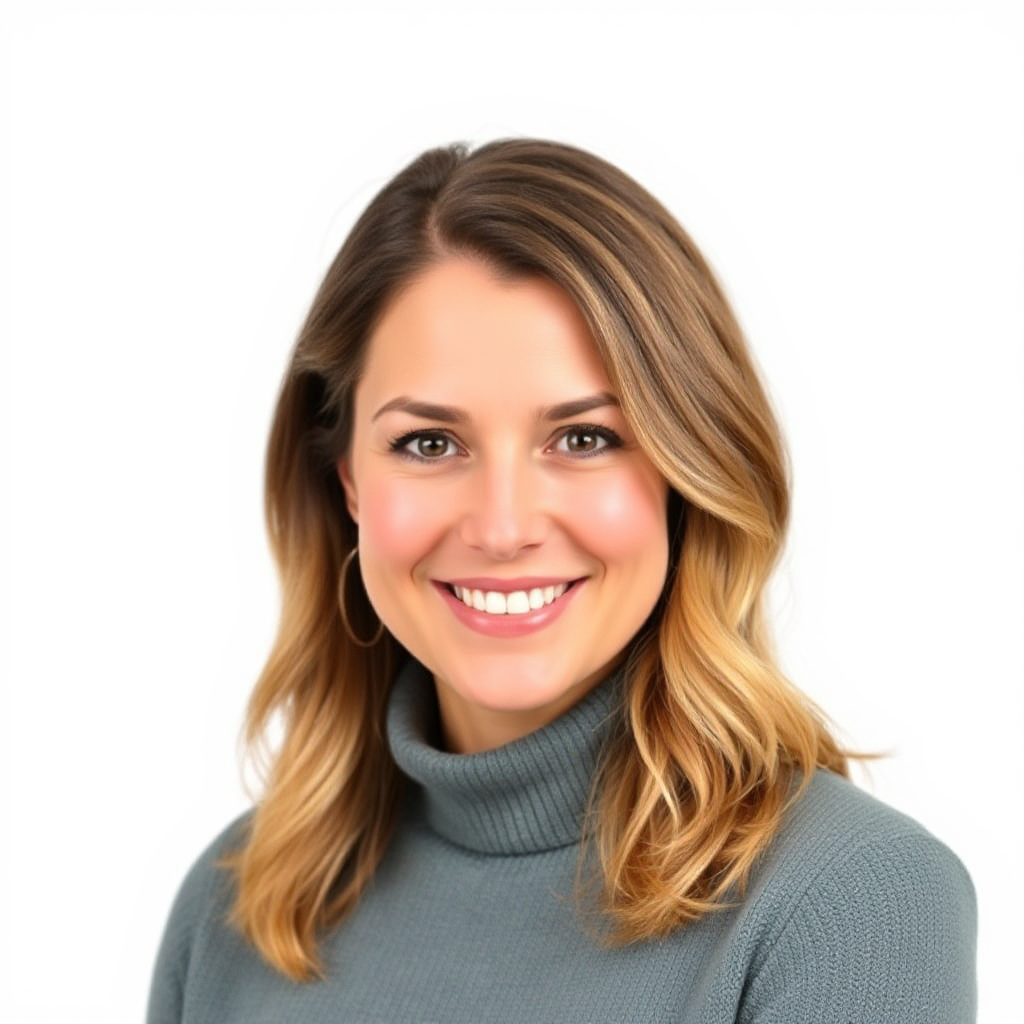
The deceased US VP Dick Cheney, who has died at the age of 84, was seen as one of the most significant holders of that office in US history. Whereas countless vice-presidents were limited to marginal or figurehead roles, Cheney held huge sway during the presidency of George W Bush, to the point that he was commonly called as the "actual president".
Bush resented such a characterisation and said the relationship was more nuanced. He noted that Cheney was courteous, always addressing him in public settings as President, while he referred to him as Dick. Bush challenged even characterisations of their relationship as a collaboration because it implied that they were equals. Despite these objections, Cheney considered the laidback president pliable on a whole raft of governmental choices.
A Post-9/11 Era
Leading of a faction of conservative hawks that featured Pentagon chief Donald Rumsfeld and deputy defence secretary Paul Wolfowitz, he strongly advocated the armed incursion of Iraq in 2003 in answer to the 9/11 attacks on New York and Washington. During of the 9/11 strike, Bush had been participating in a gathering at a educational institution in Florida. While Bush made his way to a secure location in Nebraska, Cheney assumed control, ordering the destruction of any unresponsive aircraft approaching the government building.
Cheney claimed the attacks transformed him, leading him to become focused on revenge. In conjunction with other neo-cons, such as Rumsfeld and Wolfowitz, he advocated for a invasion of Afghanistan in an endeavor to seize Osama bin Laden. Cheney then vigorously pushed for the invasion of Iraq, though there was little proof of Saddam Hussein being involved.
Debated Decisions
He voiced no apologies about the armed intervention, in which an estimated 100,000 Iraqis perished, nor about the enhanced interrogation of detainees rounded up after 9/11. He informed CNN in 2015 that the Iraq military action, which was based on misleading information repeated by Cheney, was the right decision. "It proved to be the right thing to do at that time. I had faith back then and I believe it presently."
However even then, there were opposing views at a top tier about the botched execution of Iraq. One of the government's own special envoys to the region, General Anthony Zinni (2001-03), was dismissed from the position. "I saw, at a minimum," he later wrote "obvious failure, negligence, and unaccountability: at worst, deception, incompetence, and graft."
Broader Context
Cheney was not completely to blame for the Iraq invasion. Even before 9/11, Wolfowitz had advocated for similar measures. He had composed a document detailing situations in which national priorities might be endangered (encompassing "availability of vital raw materials, mainly Persian Gulf oil"). Wolfowitz had argued that "America should be positioned to take unilateral action when cooperative measures prove impossible," particularly citing armed actions against Iraq.
Bush also had arrived in the White House vaguely intent on carrying out what his predecessor had famously refused to do in 1991; topple Saddam. Following he had been dismissed by the White House, the finance chief Paul O'Neill recounted how, at the first meeting of the National Security Council in January 2001, Bush had stated his intention of reducing America's participation in the Israeli-Palestinian conflict and proposed armed intervention against Iraq.
Bush bore a personal grudge against Saddam, believing he had been responsible for a plot to kill his father, President George HW Bush, on a trip to Kuwait in 1993. He also disliked that one of the largest establishments in Baghdad had a ground design with a likeness of his parent's face that all visitors had to tread upon.
Interrogation Methods
However it was Cheney who was one of the most vociferous supporting striking Iraq, consistently citing agency briefings that were whether insubstantial or entirely deceptive. He supported what the Bush administration politely called as "intensive questioning", the application of waterboarding and harsh treatment.
Responding to a Senate report in 2014 that determined that no useful information had been obtained through the harsh techniques, Cheney rejected the findings as "riddled with crap". He informed Fox News: "We instructed [the CIA] to establish protocols and establish procedures to capture the bastards who took the lives of 3,000 of us on 9/11 and guarantee it never happened again. That was specifically what they did and they deserve a lot of recognition."
External Perception
Cheney reveled in labels given to him by detractors such as the dark character and the dark figure, and by the idea that he was a shadow power directing Bush. In the author's 2013 book about the two, Days of Fire: Bush and Cheney in the White House, Cheney is reported as stating: "Do I represent the sinister strategist in the background that remains unseen come out of his hole? This represents a advantageous way to work, in fact."
Corporate Connections
Debate over his corporate affiliations pursued him throughout his time as vice-president. While he had minimal expertise in business but strong connections in security, especially in Saudi Arabia, he was offered a position at Halliburton, one of the world's most substantial petroleum conglomerates, in 1995 as chairman and top executive.
In 2000 he became Bush's VP candidate for the executive branch. Controversially, during the conflict in Iraq, Halliburton was granted US contracts totaling multiple billions.
It significantly boosted his finances. His yearly compensation during his time at the firm increased from his $258,394 while military head to millions. When he resigned in 2000 he had a severance arrangement totaling in excess of $20m|twenty


